
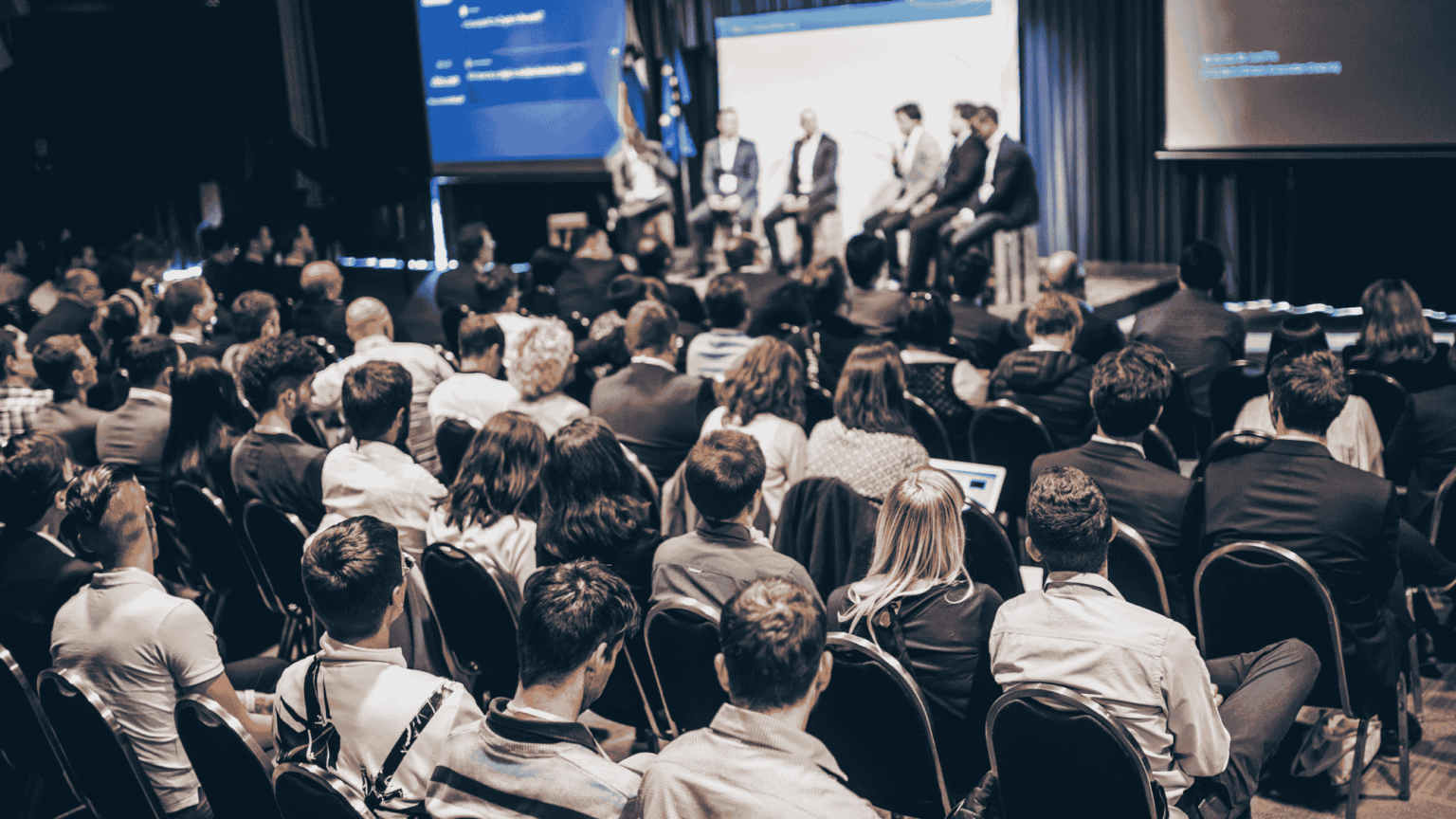
Booking an AV production team for your corporate event can feel like a big expense, especially if you’ve never done it before. Here’s what the process of working with an audio visual equipment company actually looks like, from your first call to the final teardown.
Key Takeaways
- A good production team starts with a real conversation about your goals, budget, and timeline.
- Planning includes a detailed event plan, often a site visit, and a clear minute-by-minute schedule. This gives your AV provider everything they need to run your event seamlessly, anticipating technical issues before they arise.
- On event day, the team handles setup, technical operations, and breakdown so you can focus on your guests.
Your First Consultation
You’ll talk through your event’s purpose, your brand identity, and what you’re hoping to achieve.
Expect questions about your budget, timeline, venue, and any specific ideas you already have. A good team listens first and offers suggestions based on what you actually need; so the more information they receive, the better the outcome will be.
If you’re comparing audio visual companies in Napa County, this first conversation tells you a lot. Pay attention to whether they ask good questions or just hand you a price sheet.
The Planning Phase
After the consultation, the team builds out a detailed event plan.
This covers venue logistics, AV requirements, lighting needs, and any scenic elements like pipe and drape, podiums, or custom installations.
For more complex events, a site visit is common. This lets the team check the venue’s power access, room dimensions, and existing AV setup before committing to a plan.
What gets mapped out during planning
- Sound system and microphone needs based on room size, guest count and the number of people speaking on-stage
- Lighting requirements, including stage wash, custom gobos (for projecting company logos), pinspots for highlighting certain tables or features, and branded uplighting if you have HEX or RGB color codes
- Video needs: screens, projectors, video walls, or livestreaming setups
- Conferencing/Streaming needs, if necessary, the AV team will inspect the venue’s internet infrastructure (ideally hard-line internet) to determine the best course of action for connecting your setup to Zoom or Teams for remote presenters and attendees. They will also consider audio and video inputs for the stream, accounting for what the remote guests will hear and see
- Scenic elements like staging, drape, or custom installs
Building Your Event Timeline
A clear timeline keeps everything on track. For corporate events, this often takes the form of a Run of Show, a minute-by-minute schedule the AV team uses to trigger sound cues, lighting changes, and video transitions. Without a Run of Show, your AV team is flying blind, so to speak; so providing them with a minute-by-minute timeline is essential for a smooth event.
Once your AV team meets with you and the venue regarding the event’s timeline, you’ll get a production schedule covering setup, the event itself, and breakdown. If your event has multiple presenters or a livestream component, a tech run-through before the event is worth the extra time and money. It catches problems before your audience does.
Onsite Coordination and Execution
On event day, the team arrives early. They’ll coordinate with the venue, run equipment checks, and confirm the Run of Show with anyone presenting.
During the event, technicians mic up presenters, manage sound levels, and execute lighting cues and video switching in real time. If something goes wrong, like a presenter’s laptop not connecting to the projector, it’s best if that issue is caught during the tech run-through so that no-one in the audience notices the issue. Therefore, it’s essential that the tech run-through includes testing any and all equipment that will be used during the event. If possible, make sure your presenters know to bring their laptop or slide deck early so that your AV team can test them.
For larger events with multiple mics, lighting cues, or live conferencing, expect 2 to 4 technicians on-site. Smaller breakout sessions might just need one.
AV Technology That Makes the Difference
This is where the technical side comes in. Corporate event production services handle sound systems, wireless microphones, projectors, screens, and video switchers that let presenters move between laptops without a hiccup.
A few things worth understanding:
- Lavaliere microphones clip to a collar and free up a presenter’s hands. Countryman or earset mics are the “TED Talk” style version.
- Confidence monitors sit at the foot of the stage so a speaker can see their slides, notes or countdown timer without turning around.
- Multi-format video switchers handle HDMI, USB-C, and DisplayPort inputs, so switching between laptops doesn’t cause a black screen or delay. Providing your AV team with a .JPEG holding slide (often an image of the company logo) gives them the ability to mask technical issues and changeovers by temporarily putting the holding slide on-screen while they troubleshoot a problem or open the next slide deck.
If your event includes a livestream or hybrid component, ask about hardline internet packages. Venue WiFi often can’t handle the load of a stable Zoom or Teams connection alongside hundreds of guest devices.
Post-Event Wrap-Up
Once your event wraps, the production team handles teardown and leaves the venue in the condition they found it. This includes packing equipment, removing cables, and clearing any scenic elements.
Many teams also offer a debrief: a quick conversation about what worked, what didn’t, and how any issues were handled. If you ran feedback surveys, this is a good time to go over results together, especially if you’re already thinking about your next event.
What to Do Next
- Start the conversation early
- Reach out 3 to 6 months before your event date for the best planning window
- Have your event date, venue, expected guest count, and general vision ready
- Share your venue details
A site visit or detailed venue information helps the team plan accurately. If you have branding colors, share the HEX or RGB codes too. - Build your Run of Show together
For events with multiple presenters or technical elements, a tech run-through catches issues before they become problems on event day.
Safety Note: Always confirm with your venue what AV equipment is already available in-house. This helps avoid duplicate rentals and surprises on event day.
We're Here When You're Ready
If you’re searching for audio visual companies in Napa County and want a team that explains things clearly and plans with you, not just for you, let’s talk. Techtonic Events works across Sonoma, Napa, and Marin counties, with experience ranging from small breakout meetings to large multi-day conferences.
Contact Techtonic Events today to schedule a free consultation.
📞 (844) 483-2428
Frequently Asked Questions
What is a Run of Show, and do I need one?
Lorem ipsum dolor sit amet, consectetur adipiscing elit. Ut elit tellus, luctus nec ullamcorper mattis, pulvinar dapibus leo.A Run of Show is a minute-by-minute timeline used to trigger sound cues, lighting changes, and slide transitions during your event. It’s typically required for more complex productions with multiple presenters or technical elements.
How many technicians will be on-site for my event?
It depends on complexity. Simple breakout sessions might need just one technician, while events with multiple microphones, lighting cues, or live conferencing usually need 2 to 4.
How far in advance should I book corporate event production services?
A lead time of 3 to 6 months is ideal for corporate events. Last-minute bookings within a week or so are sometimes possible, but they don’t leave much room for planning or site visits.
Do I need microphones for my event?
For groups over 20 people, usually yes. Even a great presentation loses impact if the audience can’t hear it clearly, especially in larger rooms.
Owner
Leo James is the Founder and Owner of Techtonic Events, a full-service live and virtual event production company based in Sonoma County, California. With more than two decades of experience in audiovisual design, staging, and production management, Leo has built Techtonic Events into a recognized leader in experiential events, brand activations, and corporate productions.
His expertise spans high-end conferences, festivals, nonprofit galas, and hybrid digital events, where he blends creativity, technology, and storytelling to deliver memorable experiences. Known for his calm professionalism and technical mastery, Leo leads a talented team that brings complex productions to life — from lighting and sound design to full-scale show execution.
Leo’s vision for Techtonic is rooted in collaboration, innovation, and exceeding client expectations through seamless production and genuine partnership.